
Few days ago we knew the INICIA test results, that is taking by graduates of teaching careers in elementary education. This annual exam, established in 2008, gave, with no surprises, poor results in its various forms (approximately 50% of correct answers.) Novelty this year was for the first time the results were delivered by university, issue three years ago would have been absolutely unthinkable. This is a progress, but much more progress is needed.
The test is still voluntary, both for universities and colleges (only 73% participated) and for graduates (less than 42% gave the test), so the results are equivocal. Both the ranking that was developed quickly, as the results should be viewed with caution. The situation is even worse.
Although public scrutiny of test results have any effect on the perception that the community has over the training institutions, the truth is that the effect is temporary and no permanent consequences. It is necessary that these results be taken into account in the accreditation of courses and also considered in public funding procedures, both students and institutions. Regarding the tests themselves, it is necessary to progress in its content.
The test measures disciplinary knowledge and this year pedagogical knowledge was also included. We believe that this is insufficient and perhaps wrong. It is necessary to advance beyond the discipline and pedagogy separately and inquire about the knowledge to teach the discipline. There is abundant literature on the Pedagogical Content Knowledge, which characterizes the knowledge and skills necessary to succeed in the classroom: that the students learn.
It is also required to define medium-term projection of these tests, considering universities and colleges take the curriculum decisions today to have an effect on its graduates in several years. For this projection will be crucial the information and guidance that will deliver the Standards for Initial Teacher Training and will be released by the Ministry of Education. These documents, prepared with a broad participation, indicate the North where the system should move, in terms of curriculum materials, assessment tools and monitoring processes and consequently the contents of the INICIA test.
In this scenario, of weaknesses and poor performance, there are also signs of hope and I would like to mention two: the setting up of a scholarship to study pedagogy and the contest Convenio de Desempeño MECESUP for the renewal and strengthening of the pedagogies. Two policy instruments that reflect the social consensus that increasingly recognizes that education plays a fundamental role in the pursuit of development.
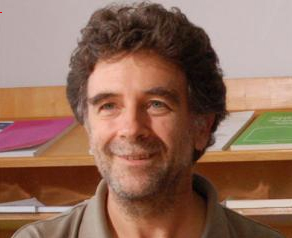
Patricio Felmer, Professor of the Department of Mathematical Engineering, FCFM-U. Chile, Researcher of the Center for Mathematical Modeling and Project Director of Standards for the Initial Training of Teachers in Mathematics area.
